AMP (Accelerated Mobile Pages)
AMP (Accelerated Mobile Pages) is an open framework for building lightweight, fast-loading web pages. Google announced the project on 7 October 2015 as an open source initiative, together with almost 30 publishers. AMP pages are built with a restricted version of HTML, asynchronous JavaScript and CSS embedded in the page. In 2019 the project joined the OpenJS Foundation incubation program. Since June 2021, AMP is no longer required for a page to appear in the Top Stories carousel in Google.
What is AMP?
AMP is an open source framework that imposes a set of technical rules on pages to make them display faster. Google presented it as a way to dramatically improve the performance of the mobile web.
According to Google's announcement, AMP is based on AMP HTML: an open framework built entirely from existing web technologies. It lets you build lightweight pages with content such as video, animations and graphics.
| Feature | Description |
|---|---|
| Full name | Accelerated Mobile Pages |
| Type | open framework for building web pages |
| Announced | 7 October 2015, Google |
| License | open source |
| Governance | in the OpenJS Foundation incubation program since 2019 |
| Project website | amp.dev |
| Uses | websites, Web Stories, ads, emails |
Despite its name, AMP is not limited to mobile devices. Google explains that AMP pages work on all device types and should use a responsive layout.
How does AMP work?
AMP speeds pages up by restricting the elements that slow down rendering. The project documentation on amp.dev describes a set of principles that together produce this speed.
| AMP principle | What it means |
|---|---|
| Asynchronous JavaScript | scripts do not block page rendering |
| Fixed resource sizes | images, ads and iframes declare their size in HTML, so the layout does not shift |
| Inline CSS | styles must be embedded in the document, up to 50 KB |
| Third-party scripts in iframes | third-party JavaScript runs in sandboxed iframes |
| GPU-accelerated animations | only the transform and opacity properties may be animated |
| Resource prioritization | images and ads load when the user is likely to see them |
| Prerendering | a page can be prepared before the user clicks it |
The AMP cache was another key element. In its 2015 announcement, Google described a new approach to caching: the publisher still hosts the content, and Google distributes it through its global cache. Google said its cache servers would be free for everyone to use.
An AMP page must comply with the AMP HTML specification. Google requires it to be technically valid and provides an AMP testing tool for this.
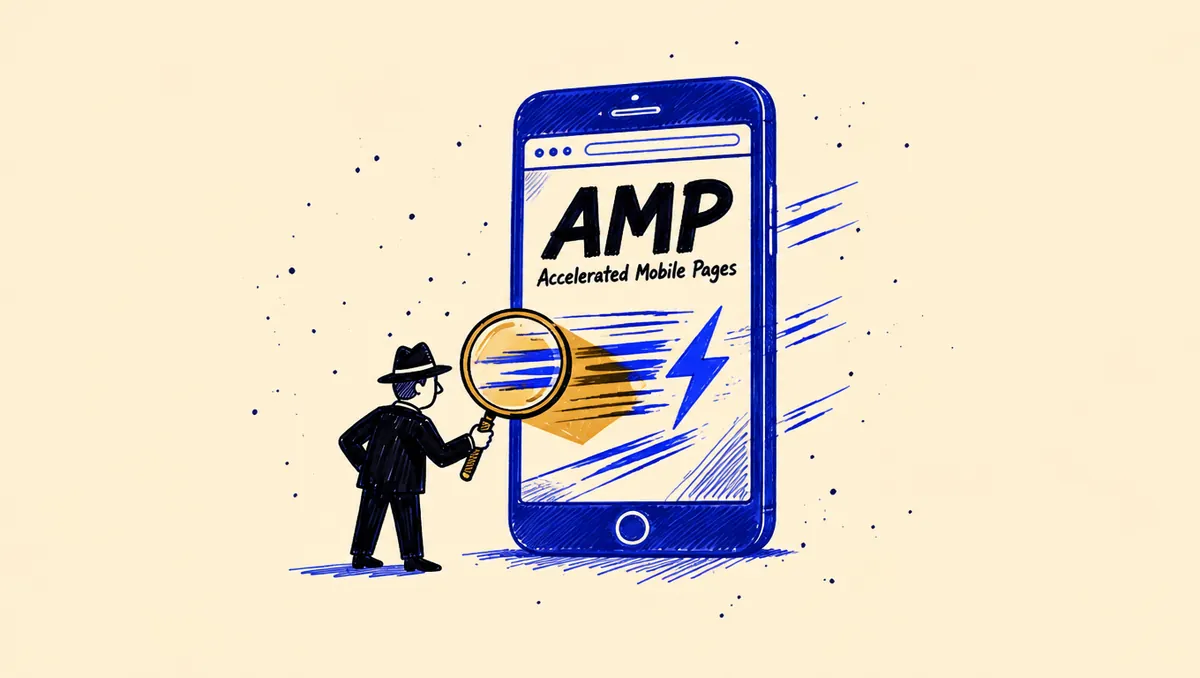
How did the AMP project start and evolve?
AMP was created in 2015 as Google's and publishers' response to slow mobile pages. Over time the project moved to an independent foundation, and its role in search declined.
| Date | Event |
|---|---|
| 7 October 2015 | Google announces the AMP project with almost 30 publishers |
| 2015 | technology partners include Twitter, Pinterest, WordPress.com and LinkedIn |
| 10 October 2019 | AMP joins the OpenJS Foundation incubation program |
| November 2020 | Google announces that non-AMP pages will be eligible for Top Stories |
| June 2021 | Page Experience update: AMP no longer required for Top Stories, Google removes the AMP badge |
In 2015 Google said that other Google services, such as Google News, would gradually use AMP as well. For several years, AMP was a condition for a page to appear in the mobile Top Stories carousel.
That changed in 2021. In April, Google announced that with the Page Experience update AMP would no longer be required for Top Stories. It also said it would stop showing the AMP badge next to results. The changes took effect from mid-June 2021.
What does AMP mean for SEO today?
AMP no longer gives pages a special place in Google results. According to Google's documentation, Search indexes AMP pages like any other pages and applies the same standards to all of them.
AMP pages can still appear as rich results if they have structured data, and they can be used to create Web Stories. Google notes, however, that AMP pages on desktop do not receive search-specific features.
| Topic | Status according to Google |
|---|---|
| Indexing | like any other page, under the same standards |
| Top Stories | AMP not required since 2021 |
| AMP badge in results | not shown since 2021 |
| Rich results | possible with structured data, as for other pages |
| Content | an AMP page should offer the same content and functions as the canonical page |
Since 2021 Google has taken page experience into account, including Core Web Vitals. A fast page can be built with AMP or with any other technology, so choosing AMP depends on a site's technical needs rather than on Google's requirements.
Frequently asked questions
Q.What does AMP stand for?
AMP stands for Accelerated Mobile Pages. It is an open framework for building fast-loading pages. Google announced it on 7 October 2015 as an open source project. Despite the name, AMP pages work on all devices, including desktops, and should use a responsive layout.
Q.Is AMP still needed for SEO?
AMP is not needed today for a page to perform well in Google. According to Google's documentation, Search indexes AMP pages like any other pages and applies the same standards. Since June 2021 AMP has also not been required for the Top Stories carousel, and Google stopped showing the AMP badge next to results at that time.
Q.Does AMP still exist?
Yes, the AMP project still exists and has its website at amp.dev. In October 2019 it joined the OpenJS Foundation incubation program, an independent foundation for JavaScript projects. Google still indexes AMP pages and describes them in its documentation, but the format no longer brings special benefits in search.
Q.What is the AMP cache?
The AMP cache is the cache through which Google distributes AMP pages. The publisher still hosts its content, and Google delivers it to users from its global server network. In its 2015 announcement Google said its cache servers would be free for everyone. This made pages opened from search results load faster.
Let's talk growth
Send a brief or drop your contact. We'll reply within 24h.
Get a quote