Parasite SEO
Parasite SEO is a tactic in which a third party's content is published on someone else's strong domain so it ranks high in Google faster. The content then benefits from ranking signals the host site built with its own material. Google calls this site reputation abuse and has treated it as spam since 5 May 2024. A typical example is an article about casinos or payday loans on a medical or educational site. Since 30 August 2026, the consequences of a violation for results in the European Economic Area (EEA) differ from those outside it.
What is parasite SEO?
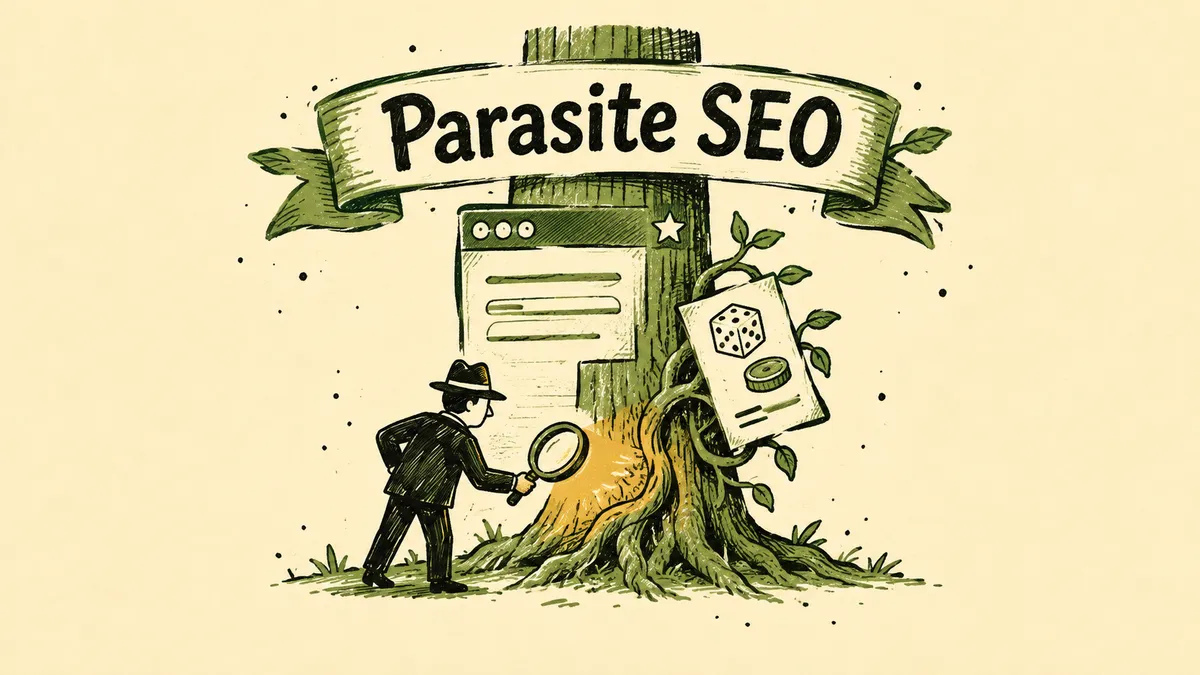
Parasite SEO means using the trust and ranking of someone else's domain to promote your own content in search results. The name comes from a parasite that feeds on its host's resources.
| Feature | Parasite SEO |
|---|---|
| Common name | parasite SEO |
| Name in Google's policies | site reputation abuse, now site reputation policy |
| Mechanism | third-party content benefits from the host domain's ranking signals |
| Typical topics | casinos, payday loans, coupon codes, products with affiliate links |
| Status in Google | violation of spam policies |
| Consequence | manual action or separate evaluation of part of the site |
Google describes two examples of a violation. The first is an educational site hosting paid payday loan reviews that a third-party author also distributes to other sites. The second is a medical site hosting a low-quality “best casinos” promotion unrelated to the rest of the site.
According to Google, hosting third-party content does not by itself violate the policy. The problem is publishing it mainly to benefit from the host domain's ranking.
How does Google treat parasite SEO?
Google treats parasite SEO as spam and can apply a manual action to part of a site. The policy on this practice changed over 2024-2026.
| Date | Change according to Google |
|---|---|
| 5 March 2024 | site reputation abuse policy announced together with the March core update |
| 5 May 2024 | the policy takes effect |
| 19 November 2024 | clarification: host involvement in creating the content does not change its third-party nature |
| 30 August 2026 | different consequences of manual actions for results in the EEA |
In March 2024 Google wrote about content published with little or no first-party oversight. In November 2024 the company reworded the policy. It stated that first-party oversight does not justify third-party content intended to exploit the domain's ranking.
In August 2026 Google changed how the policy is enforced in the EEA following discussions with the European Commission. Outside the EEA, a manual action lowers the visibility of the affected part of the site. In the EEA, that part may be separated from the main domain and, over time, evaluated on its own.
The site owner receives a notice in the Manual actions report in Search Console. They can fix the problem and submit a reconsideration request.
How does parasite SEO differ from allowed third-party content?
Allowed third-party content is integrated into the site and written for its readers. Parasite SEO is content placed mainly to take over the domain's ranking.
| Not a violation according to Google | May be a violation according to Google |
|---|---|
| wire services and press releases | paid reviews distributed to many sites |
| syndicated news in news media | casino promotion on an unrelated medical site |
| forums and comment sections | affiliate article with no author and no links from the site |
| columns and editorial-style content | content copied from another site |
| sponsored articles promoted to readers | content far below the quality of the rest of the domain |
| affiliate links marked in line with the policies |
In a manual review Google checks whether the content is fully integrated into the site. It considers the look and layout of the content, its quality, authorship and whether the same text is duplicated on other sites. None of these factors alone decides a violation.
Google also gives an example of allowed affiliate content. It is a news site's cooking section with interviews by a freelancer, with clear authorship and editorial responsibility. An example of a violation is an article about CBD oils with no author, no ad disclosure and no links from the site's sections.
Frequently asked questions
Q.What is parasite SEO?
Parasite SEO is publishing third-party content on someone else's strong domain so it ranks high in Google faster. The content then benefits from the host site's ranking signals. Google calls this practice site reputation abuse and has treated it as a spam policy violation since 5 May 2024.
Q.Is parasite SEO allowed by Google's policies?
No, Google treats parasite SEO as spam. For a violation it can apply a manual action to the part of the site with such content. Since November 2024, host oversight of the content does not change the assessment if the goal is to exploit the domain's ranking. The site owner can fix the problem and request reconsideration.
Q.Are sponsored articles parasite SEO?
Not always. Google does not consider sponsored articles a violation when the site directs them at its own readers, for example by promoting them in the publication. Violations are third-party content placed mainly to benefit from the domain's ranking. Integration with the site, quality, authorship and duplication of the text on other sites all matter.
Q.What are the consequences of parasite SEO in Europe?
Since 30 August 2026 the consequences depend on where the search happens. Outside the European Economic Area, a manual action lowers the visibility of the affected part of the site. In the EEA, that part may be separated from the main domain and evaluated on its own. Google made this change following discussions with the European Commission.
Q.What sources is this description based on?
The definition, examples and assessment criteria come from Google's spam policies for web search, updated on 28 August 2026. The history of the policy is described in Google Search Central blog posts from 5 March 2024 and 19 November 2024. The change in enforcement in the European Economic Area is described in the post “Update to the Site Reputation Policy” from August 2026. “Parasite SEO” is an industry term, while Google's documentation uses the name site reputation policy.
Let's talk growth
Send a brief or drop your contact. We'll reply within 24h.
Get a quote